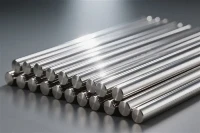

Dental medical titanium rods are high-precision materials used in the manufacture of dental implants (e.g., implants, abutments) and prostheses (e.g., denture frameworks). Their excellent biocompatibility, corrosion resistance, and mechanical strength make them an ideal choice in the dental field.
Material Characteristics
- Biocompatibility: Titanium causes no rejection reaction with human tissues and is widely used in long-term implant devices.
- Lightweight and High Strength: Titanium has low density but high strength, making it suitable for precise and durable dental components.
- Corrosion Resistance: The oxide layer formed on the titanium surface effectively resists corrosion from saliva and bodily fluids.

Production Process
Dental titanium rods are typically produced through the following steps:
- Melting and Forging: Vacuum Arc Remelting (VAR) technology ensures material purity, followed by forging to optimize grain structure.
- Cold Rolling and Finishing: Cold rolling improves dimensional accuracy, followed by polishing and cleaning to meet medical-grade surface standards.
- Quality Inspection: Includes chemical composition analysis, mechanical property testing, and non-destructive testing (e.g., ultrasonic inspection).
Industry Standards and Certifications
Dental titanium rods must comply with international standards such as:
- ISO 13485 (Quality Management System for Medical Devices)
- ASTM F136 (Standard for Titanium Alloy for Surgical Implants)
Key Points for Choosing a Supplier
- Material Traceability: Ensure each batch of titanium rods has complete production records and test reports.
- Customization Capability: Suppliers should offer flexible options in dimensions and alloy compositions (e.g., pure titanium or Ti-6Al-4V).
- Compliance and Certification: Prioritize manufacturers with ISO, FDA, or CE certifications.